The MAP News
|
|
|
FEATURE STORY
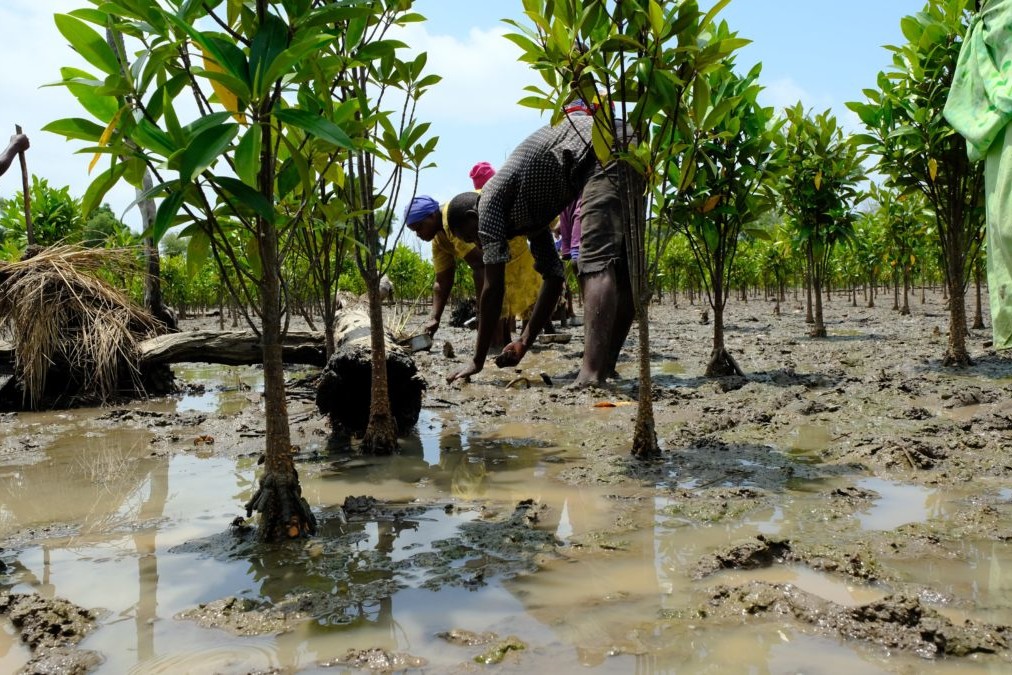
The struggle to save the last mermaids of Africa /cloudfront-eu-central-1.images.arcpublishing.com/prisa/IBCPQVJXMNEBDM4U2C2CEDU3UE.jpg "Manatee-mermaid") SENEGAL - “We, the Diola, cannot catch them. It is forbidden. To catch one you must have mystical powers,” says Louis Diatta, sitting on the banks of the Casamance River, scanning the surface of the water and talking about the West African manatees as if they were people. “They are like us,” he says. “The females have breasts and suckle their babies. They move as a family. Instead of arms and legs, they have fins, but when you look into their eyes, you get a surprise. It’s as if they were half human.” The Pointe de Saint George is one of the few places in Senegal where you can observe West African manatees, an endangered species shrouded in mystery. If you’re lucky, that is, because, like all legendary beings, they are shy and elusive. The road to this place is as magical as the manatees themselves. A nine-kilometer path that links this village to the rest of the world takes you through huge flamboyant trees and baobabs, rice fields and mangroves. SENEGAL - “We, the Diola, cannot catch them. It is forbidden. To catch one you must have mystical powers,” says Louis Diatta, sitting on the banks of the Casamance River, scanning the surface of the water and talking about the West African manatees as if they were people. “They are like us,” he says. “The females have breasts and suckle their babies. They move as a family. Instead of arms and legs, they have fins, but when you look into their eyes, you get a surprise. It’s as if they were half human.” The Pointe de Saint George is one of the few places in Senegal where you can observe West African manatees, an endangered species shrouded in mystery. If you’re lucky, that is, because, like all legendary beings, they are shy and elusive. The road to this place is as magical as the manatees themselves. A nine-kilometer path that links this village to the rest of the world takes you through huge flamboyant trees and baobabs, rice fields and mangroves. GLOBALYou don’t want to know where your shrimp comes from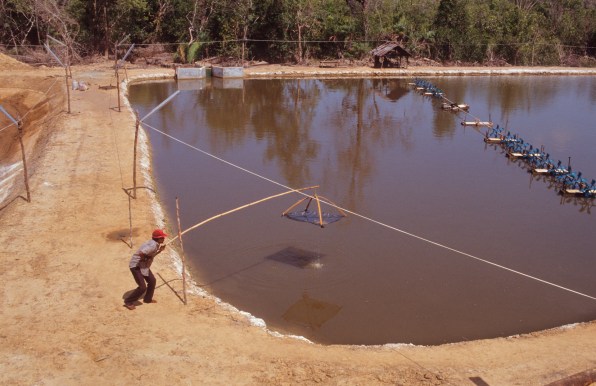 GLOBAL - If you rang in the new year with some shrimp cocktail in hand, you weren’t alone. Shrimp is the most popular seafood among Americans, with industry groups reporting that we eat about five pounds of shrimp each year, per person. We hear a lot about the negative effects of industrial animal agriculture on our planet, not to mention the animal cruelty inherent in it— but these conversations are almost invariably focused on land animals raised as livestock, particularly cows and chickens. If seafood seems to have an eco-friendly halo by contrast, that’s probably more due to our own educational blind spots than any true environmental superiority. Despite their small size, shrimp carry some major ethical baggage that includes the destruction of critical environmental features as well as horrific human rights abuses and chilling acts of animal cruelty. GLOBAL - If you rang in the new year with some shrimp cocktail in hand, you weren’t alone. Shrimp is the most popular seafood among Americans, with industry groups reporting that we eat about five pounds of shrimp each year, per person. We hear a lot about the negative effects of industrial animal agriculture on our planet, not to mention the animal cruelty inherent in it— but these conversations are almost invariably focused on land animals raised as livestock, particularly cows and chickens. If seafood seems to have an eco-friendly halo by contrast, that’s probably more due to our own educational blind spots than any true environmental superiority. Despite their small size, shrimp carry some major ethical baggage that includes the destruction of critical environmental features as well as horrific human rights abuses and chilling acts of animal cruelty.AFRICAFirst study to estimate 'blue carbon' storage in South Africa is useful for climate strategy SOUTH AFRICA - Marine ecosystems have a valuable role to play in mitigating the effects of climate change. That’s because such ecosystems – and, particularly, vegetated tidal ecosystems like mangroves and salt marshes – capture and store a significant amount of atmospheric carbon dioxide (CO₂). CO₂ has accumulated in Earth’s atmosphere at unprecedented levels since the industrial revolution. Scientific evidence shows this is the primary driver of climate change. “Blue carbon”, the term used to describe CO₂ absorbed by marine ecosystems, was an important topic of discussion at last year’s COP27 talks in Egypt. More countries are bringing blue carbon into their climate change plans and policies. Indonesia, for example, has made climate adaptation and mitigation efforts that focus on blue carbon a key component for achieving its Nationally Determined Contributions target by 2030. SOUTH AFRICA - Marine ecosystems have a valuable role to play in mitigating the effects of climate change. That’s because such ecosystems – and, particularly, vegetated tidal ecosystems like mangroves and salt marshes – capture and store a significant amount of atmospheric carbon dioxide (CO₂). CO₂ has accumulated in Earth’s atmosphere at unprecedented levels since the industrial revolution. Scientific evidence shows this is the primary driver of climate change. “Blue carbon”, the term used to describe CO₂ absorbed by marine ecosystems, was an important topic of discussion at last year’s COP27 talks in Egypt. More countries are bringing blue carbon into their climate change plans and policies. Indonesia, for example, has made climate adaptation and mitigation efforts that focus on blue carbon a key component for achieving its Nationally Determined Contributions target by 2030.AMERICASFlorida reverses course, fines Aqua development’s mangrove trimming on Sarasota Bay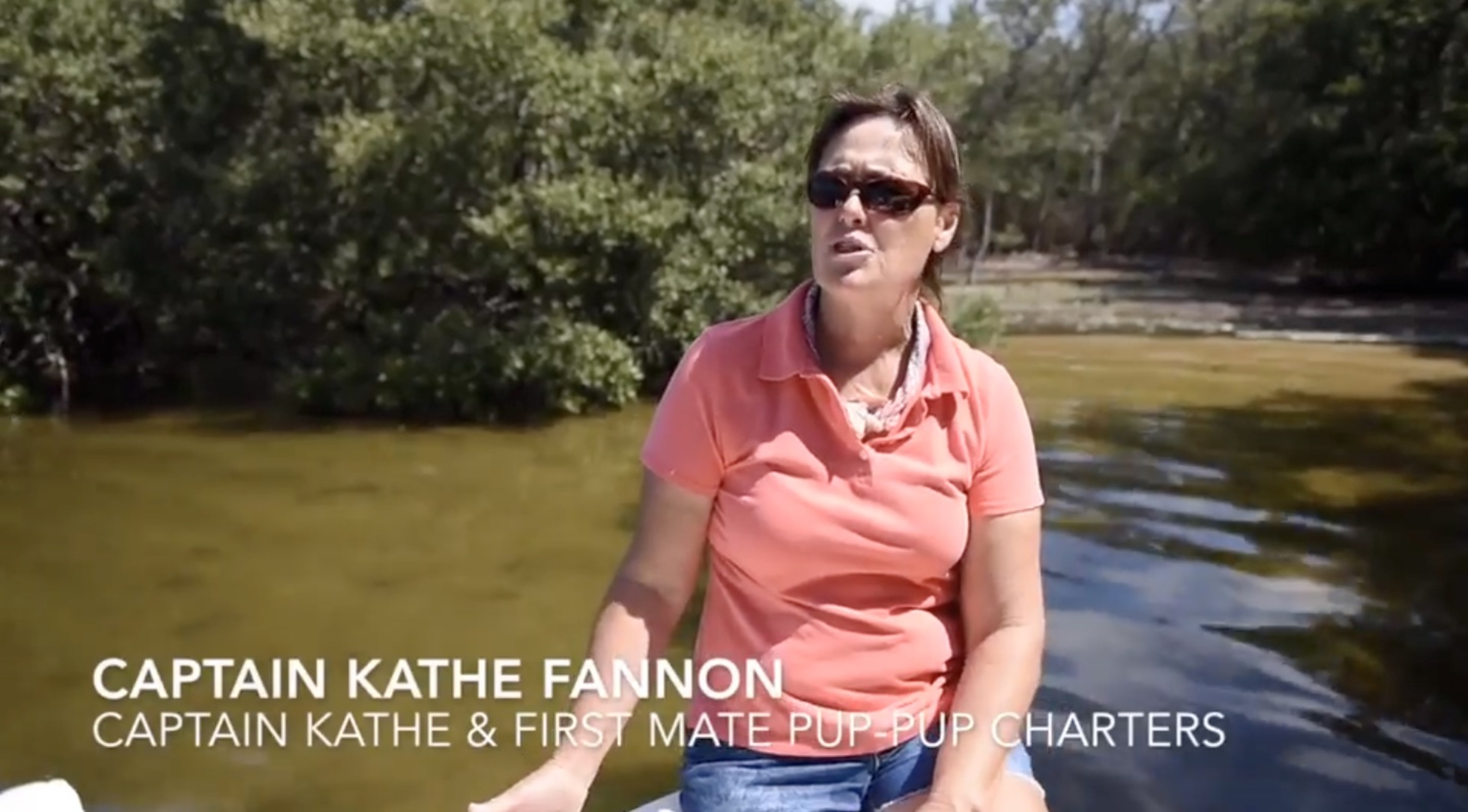 USA - The owners of the Aqua by the Bay development in southwest Manatee County have been hit with an $8,500 fine for illegal mangrove trimming. In a Dec. 22 consent order obtained by the Bradenton Herald, state officials with the Florida Department of Environmental Protection said the fine served as punishment for improper mangrove pruning. The fine marks a reversal for FDEP officials, who wrote after an initial inspection last summer that, “the mangroves appeared to be healthy and trimmed within the permit limits,” and described the damage as “minor non-compliance.”The Herald previously reported on concerns raised by local environmental activists about the trimming, which appeared to cut mangroves beyond what is allowed by state law. The trimming also left dead branches in the water, which can fuel harmful algae blooms as they decompose. USA - The owners of the Aqua by the Bay development in southwest Manatee County have been hit with an $8,500 fine for illegal mangrove trimming. In a Dec. 22 consent order obtained by the Bradenton Herald, state officials with the Florida Department of Environmental Protection said the fine served as punishment for improper mangrove pruning. The fine marks a reversal for FDEP officials, who wrote after an initial inspection last summer that, “the mangroves appeared to be healthy and trimmed within the permit limits,” and described the damage as “minor non-compliance.”The Herald previously reported on concerns raised by local environmental activists about the trimming, which appeared to cut mangroves beyond what is allowed by state law. The trimming also left dead branches in the water, which can fuel harmful algae blooms as they decompose.Indigenous community in southern Mexico revives mangroves  MEXICO - Members of an Ikoots indigenous community in the southern Mexican state of Oaxaca have embarked on a projects to restore the ravaged mangroves on the lake surrounding the village of San Mateo del Mar in hopes of mitigating the effects of climate change. Every evening at sundown, more than 70 women and men push carts loaded with soil and botoncillo (buttonwood) saplings down to the edge of the lake, which lies near the Gulf of Tehuantepec, for planting. The Ikoots are using the ancient Mesoamerican technique of “chinampas,” artificial islands created by interweaving reeds with stakes beneath the lake’s surface. The “floating gardens” of the Aztec capital of Tenochtitlan that made such an impression on the conquistadors are the best known examples of the practice. Doña Albertina Flores, a 45-year-old fisherwoman who works on the project along with her two children, takes a moment to tell EFE that restoring the mangroves will encourage the return of fish and shrimp, which were once plentiful in the lagoon. In many cases, she said, it was necessity that drove residents to chop down the mangroves. “But right now we are planting to help those little ones who are coming along,” Flores said. MEXICO - Members of an Ikoots indigenous community in the southern Mexican state of Oaxaca have embarked on a projects to restore the ravaged mangroves on the lake surrounding the village of San Mateo del Mar in hopes of mitigating the effects of climate change. Every evening at sundown, more than 70 women and men push carts loaded with soil and botoncillo (buttonwood) saplings down to the edge of the lake, which lies near the Gulf of Tehuantepec, for planting. The Ikoots are using the ancient Mesoamerican technique of “chinampas,” artificial islands created by interweaving reeds with stakes beneath the lake’s surface. The “floating gardens” of the Aztec capital of Tenochtitlan that made such an impression on the conquistadors are the best known examples of the practice. Doña Albertina Flores, a 45-year-old fisherwoman who works on the project along with her two children, takes a moment to tell EFE that restoring the mangroves will encourage the return of fish and shrimp, which were once plentiful in the lagoon. In many cases, she said, it was necessity that drove residents to chop down the mangroves. “But right now we are planting to help those little ones who are coming along,” Flores said.
ASIAVital Northern Mangroves Need Uncompromising Protection
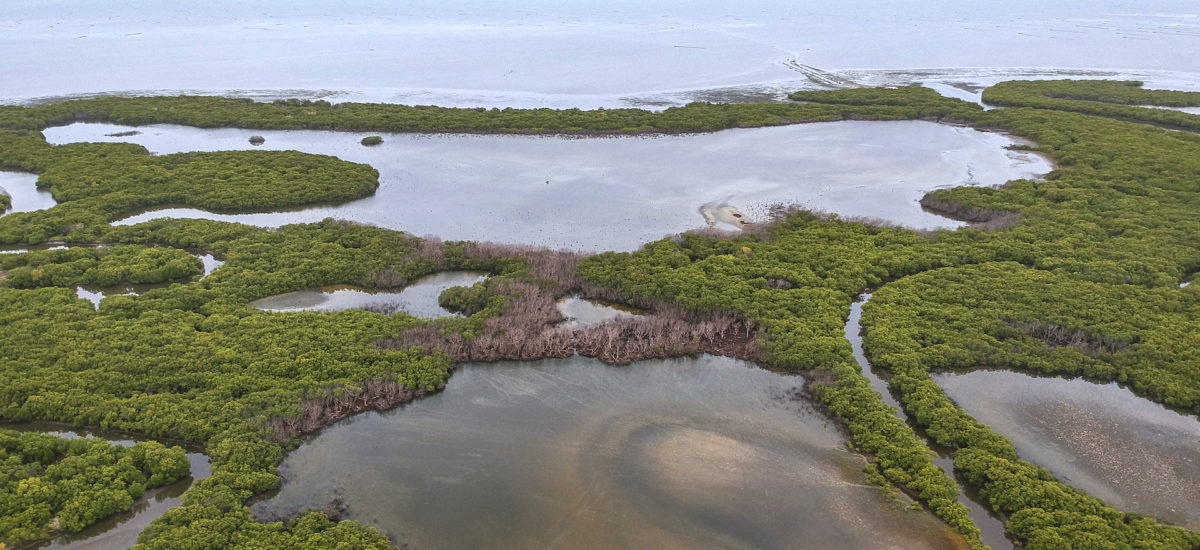 SRI LANKA - On the northern coast of Sri Lanka in the Mannar District is a place of extraordinary importance to conservation and to the economic wellbeing of the human populations who have lived off its bounty for centuries. Vidattaltivu (Wedithalathive) is an amazing complex of interconnected ecosystems; it drives every activity there and beyond. The ecosystems of Vidattaltivu – sea grasses, mangroves, mud flats and salt marshes – are all vital for the diversity of the species they support. In 2009, at the end of the civil war, a Northern Strategic Environmental Assessment was inaugurated that looked at all the sensitive areas that had now been opened in the North. After five years of study, a comprehensive report was published that concluded due to its importance to biodiversity and people, Vidattaltivu be designated as a Protected Area. In 2016, it was declared a Nature Reserve by Extraordinary Gazette (No. 1956/13). Yet just one year later, in 2017, a joint paper was presented to the cabinet by the Ministry of Wildlife and Ministry of Forests to de-gazette Vidattaltivu. SRI LANKA - On the northern coast of Sri Lanka in the Mannar District is a place of extraordinary importance to conservation and to the economic wellbeing of the human populations who have lived off its bounty for centuries. Vidattaltivu (Wedithalathive) is an amazing complex of interconnected ecosystems; it drives every activity there and beyond. The ecosystems of Vidattaltivu – sea grasses, mangroves, mud flats and salt marshes – are all vital for the diversity of the species they support. In 2009, at the end of the civil war, a Northern Strategic Environmental Assessment was inaugurated that looked at all the sensitive areas that had now been opened in the North. After five years of study, a comprehensive report was published that concluded due to its importance to biodiversity and people, Vidattaltivu be designated as a Protected Area. In 2016, it was declared a Nature Reserve by Extraordinary Gazette (No. 1956/13). Yet just one year later, in 2017, a joint paper was presented to the cabinet by the Ministry of Wildlife and Ministry of Forests to de-gazette Vidattaltivu. INDONESIA - Much of the mangroves, seagrass beds and coral reefs in Indonesia lie outside protected areas, which could thwart efforts at effective marine conservation, a new report shows. “These essential ecosystems, i.e. mangrove, seagrass, coral reef — the power of three, are known as ecosystems that function as habitat and protection for sea organisms, fish, including for nursery ground/reproduction,” Tezza Napitupulu, a former economics researcher at WRI Indonesia and lead author of the report published earlier this month. With the threat of the climate crisis, there’s been a growing appreciate of these ecosystems’ importance as barriers against ocean disasters and as stores of carbon dioxide, especially mangroves and seagrass, said Napitupulu, who is now a lecturer at the University of Indonesia’s School of Economics and Business. “We’re calling for more of these essential ecosystems to be included in the marine protected areas in the future,” said Arief Wijaya, WRI Indonesia’s program director and a co-author of the report. INDONESIA - Much of the mangroves, seagrass beds and coral reefs in Indonesia lie outside protected areas, which could thwart efforts at effective marine conservation, a new report shows. “These essential ecosystems, i.e. mangrove, seagrass, coral reef — the power of three, are known as ecosystems that function as habitat and protection for sea organisms, fish, including for nursery ground/reproduction,” Tezza Napitupulu, a former economics researcher at WRI Indonesia and lead author of the report published earlier this month. With the threat of the climate crisis, there’s been a growing appreciate of these ecosystems’ importance as barriers against ocean disasters and as stores of carbon dioxide, especially mangroves and seagrass, said Napitupulu, who is now a lecturer at the University of Indonesia’s School of Economics and Business. “We’re calling for more of these essential ecosystems to be included in the marine protected areas in the future,” said Arief Wijaya, WRI Indonesia’s program director and a co-author of the report.
Mangrove Clearance Halt Progress On Virar-Dahanu Railway Line
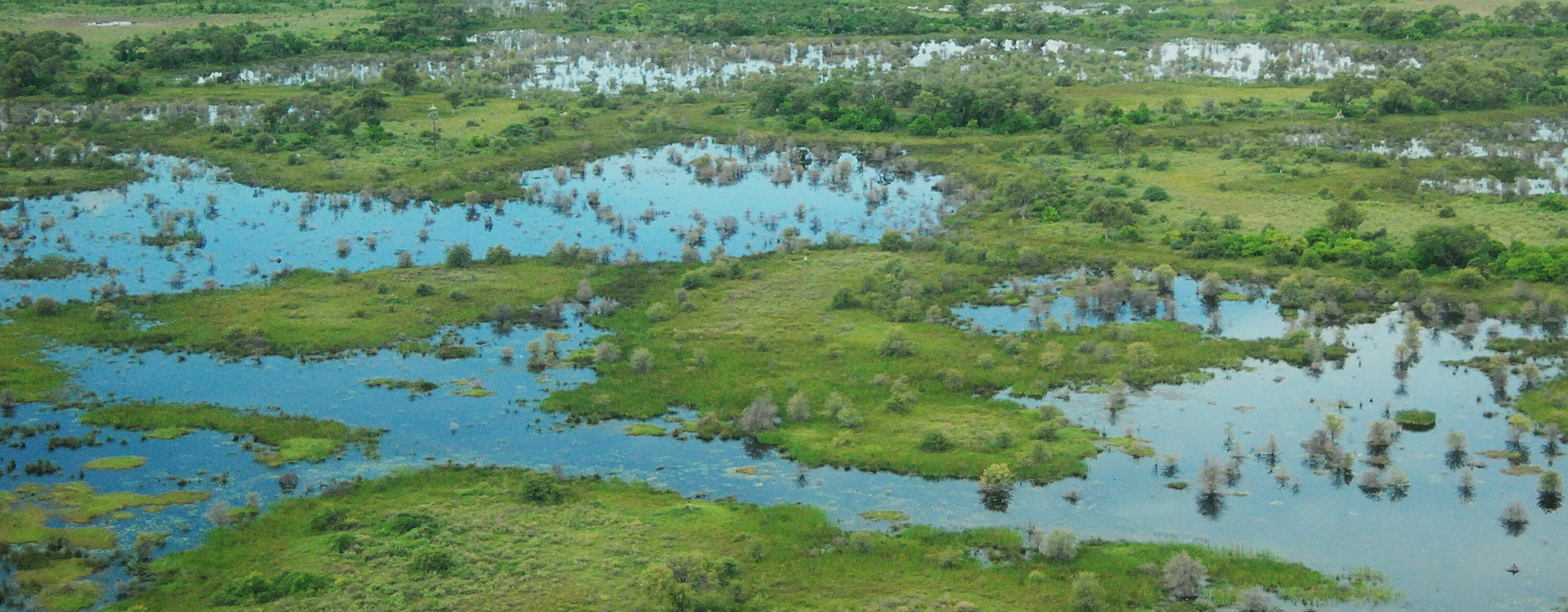 INDIA – The Mumbai Railway Vikas Corporation (MRVC) has hit a roadblock as its plan of enhancing the railway line capacity between Virar and Dahanu on the western line has been stagnated. The project was initially approved in February 2022; however, the Bombay High Court is yet to approve the project's clearing of 24.5 hectares of mangroves in the Palghar district. The Regional Empowered Committee (REC) of the Ministry of Environment, Forests and Climate Change has given permission to MRVC to start construction on the railway line's sections that are not within protected mangrove patches, although Stage II's final approval is still pending. The project will result in the removal of roughly 25 thousand trees, about 24 thousand of which would be mangroves, therefore the improvement will come at a price to the ecosystem. On 54 hectares of degraded land in three surrounding villages in Palghar itself, compensatory afforestation will be recommended in order to lessen the effects of the loss of such natural resources. INDIA – The Mumbai Railway Vikas Corporation (MRVC) has hit a roadblock as its plan of enhancing the railway line capacity between Virar and Dahanu on the western line has been stagnated. The project was initially approved in February 2022; however, the Bombay High Court is yet to approve the project's clearing of 24.5 hectares of mangroves in the Palghar district. The Regional Empowered Committee (REC) of the Ministry of Environment, Forests and Climate Change has given permission to MRVC to start construction on the railway line's sections that are not within protected mangrove patches, although Stage II's final approval is still pending. The project will result in the removal of roughly 25 thousand trees, about 24 thousand of which would be mangroves, therefore the improvement will come at a price to the ecosystem. On 54 hectares of degraded land in three surrounding villages in Palghar itself, compensatory afforestation will be recommended in order to lessen the effects of the loss of such natural resources.Did Humans Arrive in Micronesia Much Earlier Than We Thought?
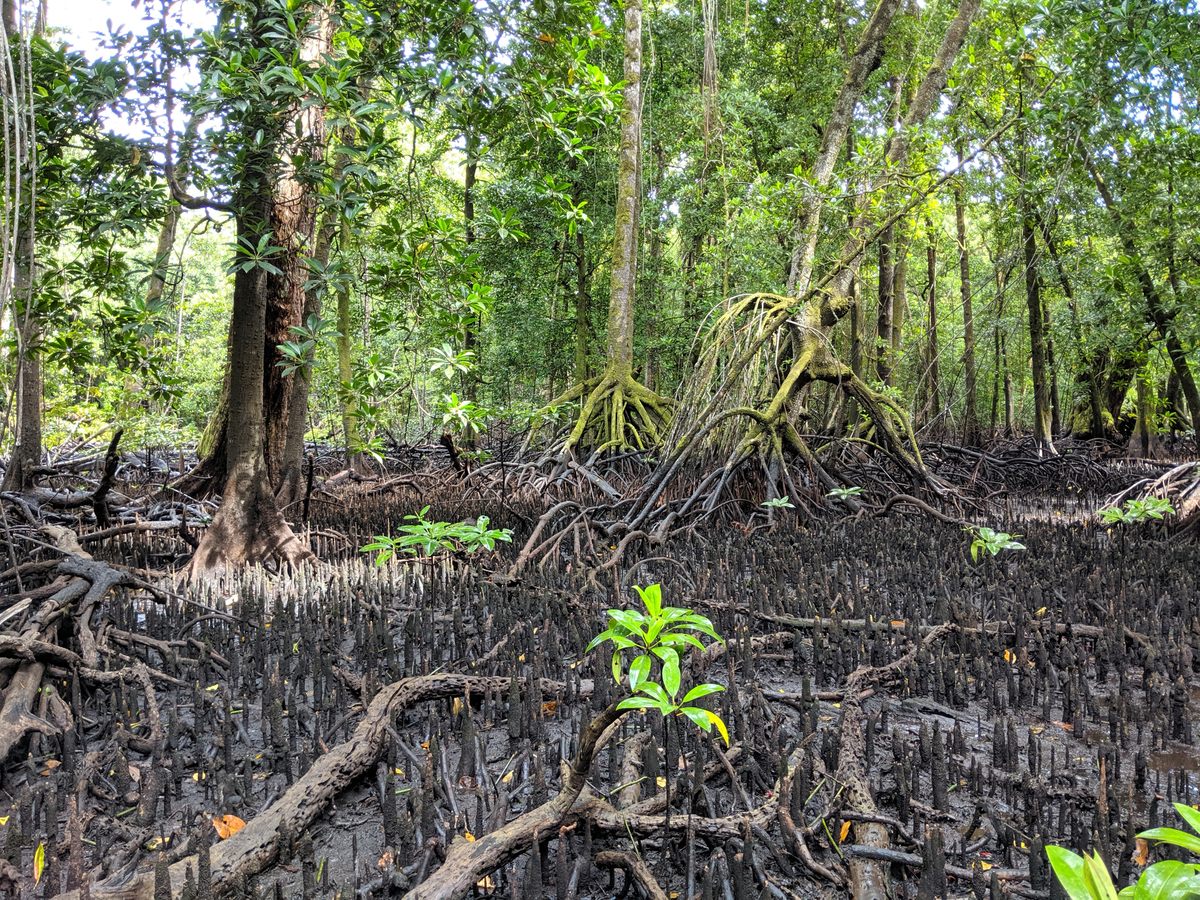 MICRONESIA – Sea levels in Micronesia rose much faster over the past 5,000 years than previously thought, according to a new study published recently in Proceedings of the National Academy of Sciences. This sea level rise is shown by the accumulation of mangrove sediments on the islands of Pohnpei and Kosrae. The finding may change how we think about when people migrated into Remote Oceania, and where they might have voyaged from. The Study looks at the published ages of settlement across the western part of Remote Oceania and found that high islands tend to show earlier ages of settlement compared to atolls, which is what we would expect. But we don’t see this pattern in Micronesia: The high islands of Pohnpei and Kosrae show settlement ages about 1,000 years later than other similar islands. Why? Deep within the mangrove forests of Pohnpei and Kosrae, previous researchers found mangrove sediments up to five meters (16.4 feet) deep. The only explanation for such deep mangrove sediments is sustained sea level rise. Mangroves live at the coast, between low tide and high tide. Therefore, as sea level rises, organic carbon and sediments accumulate beneath the mangrove forests, creating deep soils. MICRONESIA – Sea levels in Micronesia rose much faster over the past 5,000 years than previously thought, according to a new study published recently in Proceedings of the National Academy of Sciences. This sea level rise is shown by the accumulation of mangrove sediments on the islands of Pohnpei and Kosrae. The finding may change how we think about when people migrated into Remote Oceania, and where they might have voyaged from. The Study looks at the published ages of settlement across the western part of Remote Oceania and found that high islands tend to show earlier ages of settlement compared to atolls, which is what we would expect. But we don’t see this pattern in Micronesia: The high islands of Pohnpei and Kosrae show settlement ages about 1,000 years later than other similar islands. Why? Deep within the mangrove forests of Pohnpei and Kosrae, previous researchers found mangrove sediments up to five meters (16.4 feet) deep. The only explanation for such deep mangrove sediments is sustained sea level rise. Mangroves live at the coast, between low tide and high tide. Therefore, as sea level rises, organic carbon and sediments accumulate beneath the mangrove forests, creating deep soils.
Like this newsletter? *Articles in this newsletter may mention practices being used and/or show exagerated results being claimed without proof. Stories are presented here in effort to show mangrove related activity around the world and do not necessarily reflect Mangrove Action Project's views or mangrove restoration best-practices. NOTICEChildrens Art Calendars 2023
ORDER YOURS HERE 
ACTION ALERTS
|
|
|
Mangrove Action Project Click here to view past newsletters
|
|
Mangrove Action Project's mission is to empower communities worldwide to restore, manage, and conserve mangrove forests. Through science, training, and environmental education, we provide nature-based solutions for people and our planet. MAP newsletter brings you news you can use: stories from around the globe pertaining to mangroves and the people who rely on them. To search a database of all MAP blogposts over the past 30 years, enter text in the box below. Thank you for loving the mangroves!










No comments:
Post a Comment
Note: Only a member of this blog may post a comment.